


/file/publisher-c1a3f893382d2b2f8a9aa22a654d9c97/2023/09/19414228ebef9ae8c01fe34915739603.jpg)

Govt open to reintroduce GST as strategy to widen tax base
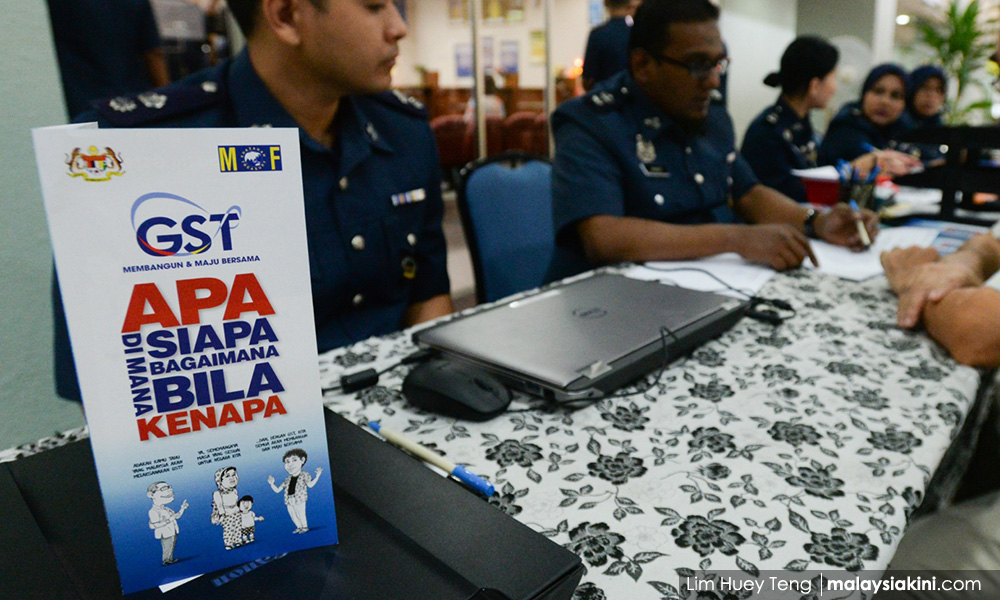
The government is open to reintroducing the controversial goods and services tax (GST) as part of its strategy to expand the tax revenue base in an effort to achieve fiscal sustainability.
Economy Minister Rafizi Ramli said the GST could be one of various options to generate more tax revenue, but there are no plans for it at the moment.
The government is open to reintroducing the controversial goods and services tax (GST) as part of its strategy to expand the tax revenue base in an effort to achieve fiscal sustainability.
Economy Minister Rafizi Ramli said the GST could be one of various options to generate more tax revenue, but there are no plans for it at the moment.
"We are focusing on developing and rolling out the capital gains tax in 2024. The government will stick to this strategy.
"We’re willing to explore different methods to achieve this fiscal sustainability through a wider revenue base.
"Whether it’s capital gains tax, GST or any form of direct or indirect taxes, I prefer to keep that strategy open and we will decide on a year-to-year basis," he said at a press conference at the Parliament lobby, after Prime Minister Anwar Ibrahim tabled the mid-term review of the 12th Malaysia Plan.
Rafizi also added that any new taxes introduced will be announced by the Finance Ministry.
In March, Deputy Finance Minister Ahmad Maslan told Parliament the nett revenue for GST was RM27.3 billion in 2015, when it was introduced to replace the sales and services tax (SST).
However, in 2019, the government gained RM27 billion from SST, which was reintroduced by the Pakatan Harapan government in 2018.
No borrow to spend
The mid-term review includes the rollout of various programmes, which would incur some RM15 billion in extra spending.
Rafizi said the government is certain that doing so will not impact its targeted budget deficit of 3.5 percent.
He added that the government projects are set to receive additional government revenue and make savings from good governance, which will cover the additional spending.
"We're confident in keeping the deficit at 3.5 percent. We won't be borrowing to spend," he told reporters.
The 12th Malaysia Plan is an economic blueprint for 2021 to 2025, while the mid-term review revises the plan for the last three years.
Among some key takeaways from the mid-term review is the doubling down on the politically risky plans to take away broad-based subsidies for fuel, taking instead a targeted approach.
According to the plan, this will be aided by a centralised economic data repository, Pangkalan Data Utama (Padu), which the government believes provides better data on household incomes, including those in the informal sector.
In 2022, the government spent RM50.8 billion on petrol, diesel and gas subsidies, which is a huge jump from RM9 billion spent by the Najib Abdul Razak government in 2009, when that administration tried to remove such subsidies.
/file/publisher-c1a3f893382d2b2f8a9aa22a654d9c97/2020/11/8239b6f2cc945c5624ce22f5a176768e.jpg)
/file/publisher-c1a3f893382d2b2f8a9aa22a654d9c97/2023/02/d98c4197fda683035f3f05349c9e32f9.jpg)
/file/publisher-c1a3f893382d2b2f8a9aa22a654d9c97/2020/10/e0c60499dbddbd4cf74c9f3aadb17425.jpg)
/file/publisher-c1a3f893382d2b2f8a9aa22a654d9c97/2023/09/a7ace2fd8405809b223711afe19cc6e3.jpg)
/file/publisher-c1a3f893382d2b2f8a9aa22a654d9c97/2023/09/510b471207a92eb396a43f1dcdbd4d57.jpg)
/file/publisher-c1a3f893382d2b2f8a9aa22a654d9c97/2021/08/c6f488bed5714dcfcaadeed2575ceb01.jpg)
/file/1350/a59048940402f69b52cd726f71422fc5.jpeg)


Are you sure you want to delete this comment?
This action cannot be undone.